
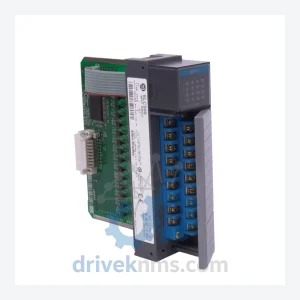
Allen-Bradley 1746-IO12 Combination I/O Module – Obsolete SLC 500 Spare Part
Allen-Bradley 1746-IO12 is listed for SLC 500 RFQ review. Confirm quantity, condition and destination before quotation.
RFQ-ready industrial model
Model: 1786-RG6F
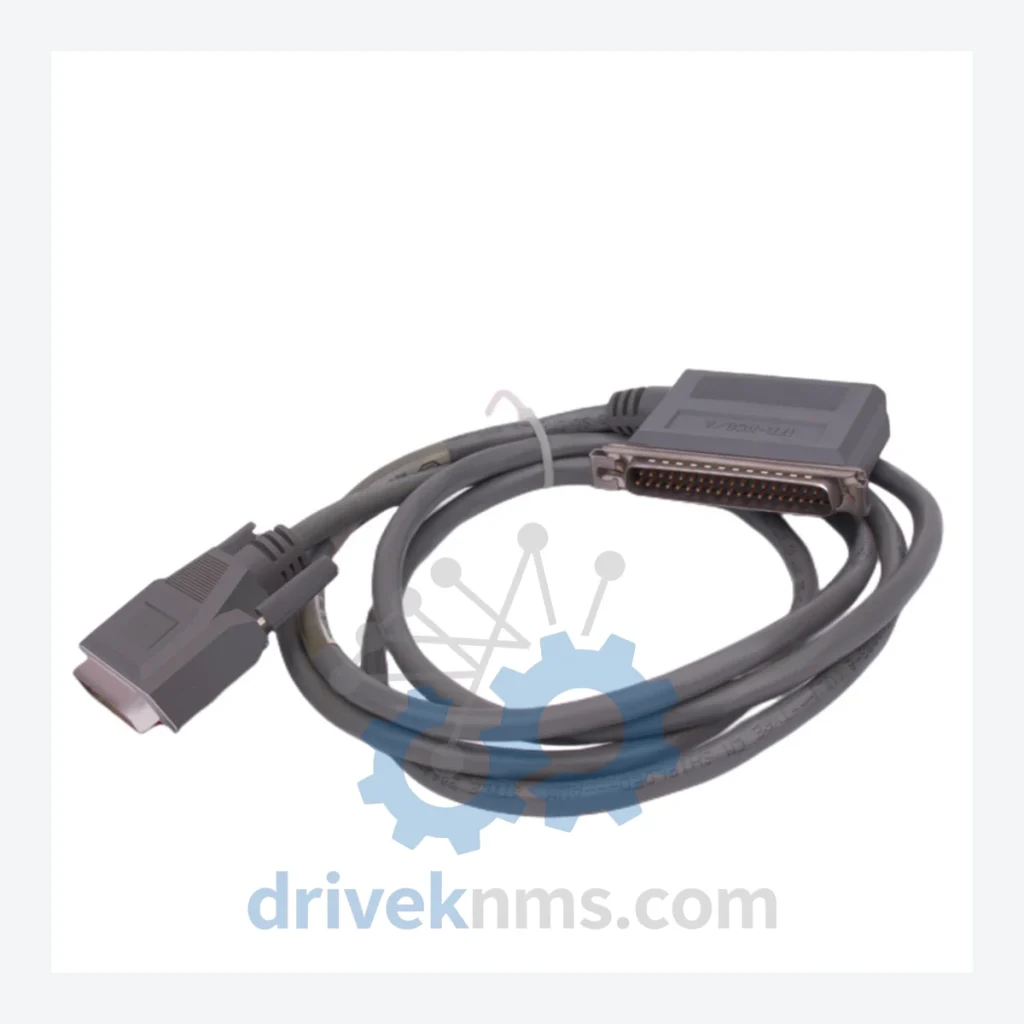
Product Overview
Commercial availability is handled through direct RFQ, model verification and export-oriented follow-up rather than public cart checkout.
Datasheet Preview
Use attached product manuals when available. If the manual is not public yet, request the full file directly through RFQ.
Commercial Path
Product pages on DRIVEKNMS are designed to verify model, brand and series first, then move the buyer into one clean quotation path.
Technical Dossier
The Allen-Bradley ControlNet platform is a deterministic, repeatable industrial network protocol developed by Rockwell Automation, operating at 5 Mbps over coaxial or fiber media. It has been deployed as a primary control backbone in continuous-process industries including petrochemical refineries, nuclear power generation facilities, offshore oil platforms, and large-scale chemical manufacturing plants. ControlNet's time-division multiple access (TDMA) scheduling mechanism guarantees deterministic data delivery for I/O and peer-to-peer messaging, making it a preferred architecture for safety-critical and high-availability control systems. Installations of ControlNet infrastructure remain active globally across tens of thousands of nodes, with many sites operating original hardware commissioned in the late 1990s and early 2000s. The 1786-RG6F is a RG-6 coaxial cable component within this ecosystem, used for trunk and drop wiring in ControlNet physical layer installations.
ControlNet was formally introduced by Allen-Bradley in 1995 as a successor to the proprietary Data Highway Plus (DH+) network, designed to bridge the gap between DeviceNet (device-level) and Ethernet/IP (information-level) networks in the Purdue Reference Model. The original physical layer specification mandated RG-6 coaxial cable with BNC connectors, supporting trunk segments up to 1,000 meters with up to 48 nodes per segment using repeaters.
In the early 2000s, Rockwell Automation introduced fiber-optic media options (1786-RPFRL, 1786-RPFRXL) to address electromagnetic interference (EMI) challenges in high-voltage switchgear environments and long-distance inter-building runs. The architecture remained backward-compatible across hardware generations, allowing 1747 SLC 500, 1756 ControlLogix, and 1771 PLC-5 platforms to coexist on the same ControlNet segment via their respective scanner and adapter modules.
By 2010, Rockwell Automation began transitioning new system designs toward EtherNet/IP, which offers higher bandwidth and IT infrastructure convergence. ControlNet was formally classified as a mature technology, with Rockwell committing to long-term spare parts availability but ceasing active feature development. Sites with existing ControlNet infrastructure face a strategic choice between costly migration to EtherNet/IP and extended lifecycle management of existing ControlNet assets — a gap that specialist distributors such as DriveKNMS are positioned to fill.
The following SKUs represent verified, commonly deployed components within the Allen-Bradley ControlNet ecosystem. Classifications follow standard I/O and network architecture categories.
Coaxial Cable & Physical Layer Media
1786-RG6F: RG-6 coaxial cable, bulk spool, for ControlNet trunk/drop wiring
1786-RG6: RG-6 coaxial cable, standard grade, non-plenum trunk media
1786-TPYR: Tap, 75-ohm, for ControlNet coax trunk tap connections
1786-TPYS: Tap, 75-ohm, short-body variant for space-constrained panel installations
1786-TPS: Terminator plug, 75-ohm, for ControlNet coax segment end termination
Repeaters & Media Converters
1786-RPT: ControlNet coax-to-coax repeater, extends segment length up to 1,000 m
1786-RPCD: ControlNet coax-to-coax repeater with diagnostics LED indicators
1786-RPFRL: ControlNet fiber repeater, multimode, for inter-segment fiber runs
1786-RPFRXL: ControlNet fiber repeater, extended range, single-mode fiber
ControlLogix ControlNet Scanner/Bridge Modules (1756 Platform)
1756-CNB: ControlNet bridge module for 1756 ControlLogix chassis, single port
1756-CNBR: ControlNet bridge module, redundant media, dual-port coax
1756-CN2: ControlNet bridge, Series B, enhanced diagnostics and throughput
1756-CN2R: ControlNet bridge, Series B, redundant media configuration
SLC 500 ControlNet Scanner (1747 Platform)
1747-KFC15: ControlNet interface module for SLC 500 chassis, 1 Mbps coax
PLC-5 ControlNet Scanner (1771 Platform)
1771-ACN15: ControlNet adapter module for 1771 I/O chassis, 1.5 Mbps
1771-ACNR15: ControlNet adapter, redundant media, for 1771 remote I/O chassis
Flex I/O ControlNet Adapter (1794 Platform)
1794-ACN15: ControlNet adapter for 1794 Flex I/O terminal base assemblies
A significant portion of the global ControlNet installed base consists of hardware that Rockwell Automation has classified as discontinued or end-of-life. Modules such as the 1756-CNB (Series A), 1771-ACN15, and 1747-KFC15 are no longer manufactured, yet they remain in active service at facilities where a full migration to EtherNet/IP is not economically or operationally feasible within current maintenance cycles.
DriveKNMS maintains a dedicated inventory of tested surplus and refurbished ControlNet components sourced from decommissioned plant assets, authorized channel partners, and controlled secondary market channels. Each unit undergoes functional verification before dispatch. For physical layer components such as the 1786-RG6F coaxial cable, DriveKNMS supplies cut-to-length and bulk spool formats to support both emergency replacement and planned maintenance shutdowns.
ControlNet modules present specific test challenges due to their integrated backplane communication logic, TDMA scheduling firmware, and coaxial physical layer interfaces. DriveKNMS applies the following verification procedures to all ControlNet inventory:
For scanner and bridge modules (1756-CNB, 1756-CN2, 1756-CNBR series): units are installed in a live 1756 ControlLogix test chassis running RSLogix 5000 / Studio 5000. Network identity, node address assignment, scheduled and unscheduled bandwidth allocation, and I/O connection establishment are verified against a reference ControlNet segment. Firmware revision is documented and reported with each unit.
For repeaters (1786-RPT, 1786-RPCD): signal integrity is measured at input and output ports using a ControlNet network analyzer. Insertion loss, return loss, and TDMA frame pass-through are validated at 5 Mbps.
For coaxial cable and passive components (1786-RG6F, 1786-TPYR, 1786-TPS): impedance continuity (75-ohm ±3%) and connector integrity are verified. Cable assemblies are tested for shield continuity and center conductor resistance.
Continue The Model Path
Move from this exact model into the matching system hub, brand archive, model-family archive or lifecycle sourcing route before sending a final RFQ list.
Related Paths
Allen-Bradley 1746-IO12 is listed for SLC 500 RFQ review. Confirm quantity, condition and destination before quotation.
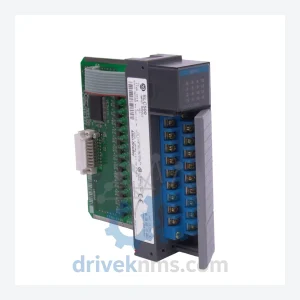
Allen-Bradley 1746-ITV16 is listed for SLC 500 RFQ review. Confirm quantity, condition and destination before quotation.
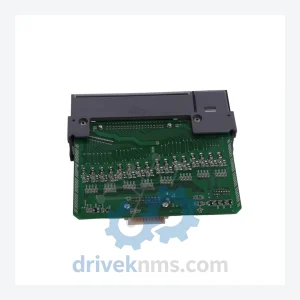
Allen-Bradley 1746-OV32 is listed for SLC 500 RFQ review. Confirm quantity, condition and destination before quotation.