
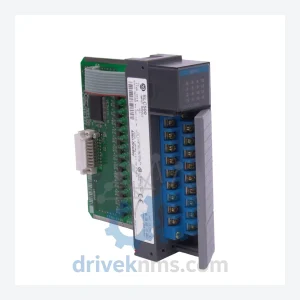
Allen-Bradley 1746-IO12 Combination I/O Module – Obsolete SLC 500 Spare Part
Allen-Bradley 1746-IO12 is listed for SLC 500 RFQ review. Confirm quantity, condition and destination before quotation.
RFQ-ready industrial model
Model: 1791-DSIB12
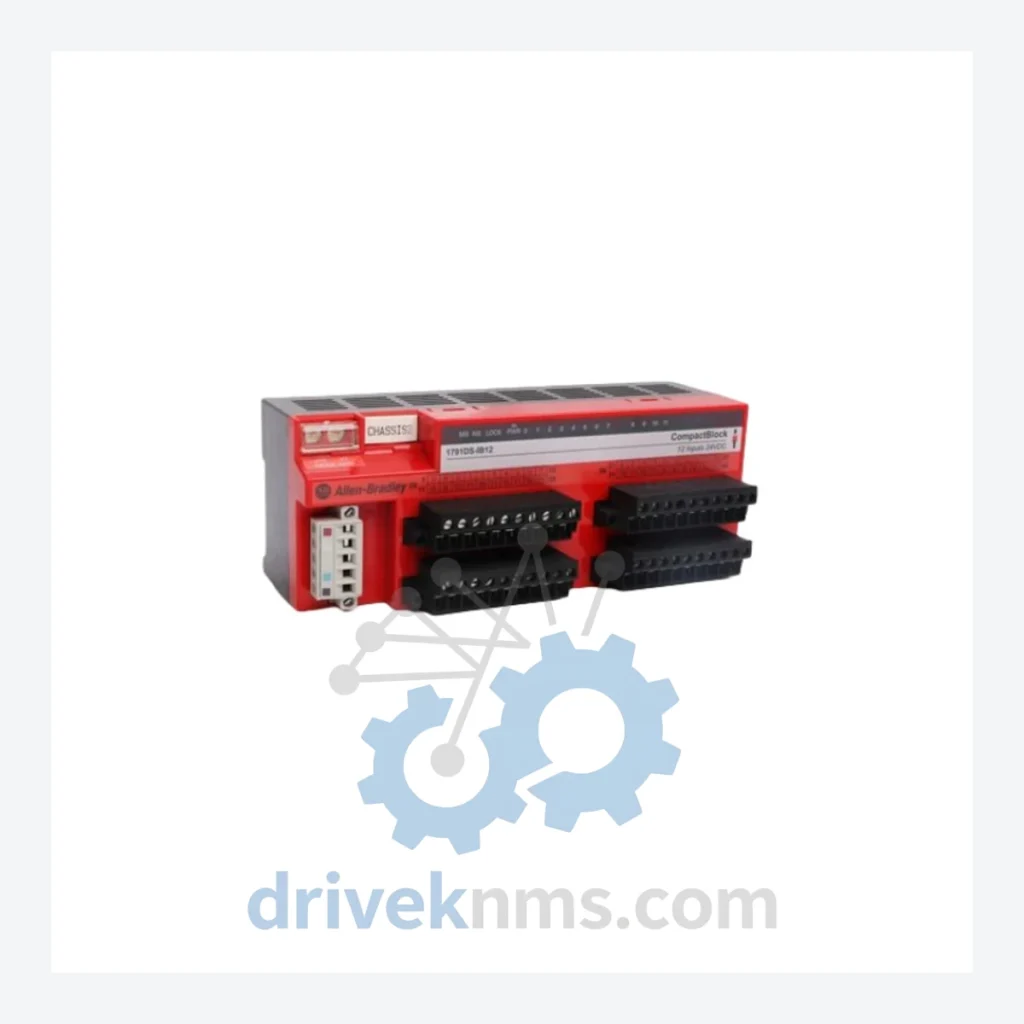
Product Overview
Commercial availability is handled through direct RFQ, model verification and export-oriented follow-up rather than public cart checkout.
Datasheet Preview
Use attached product manuals when available. If the manual is not public yet, request the full file directly through RFQ.
Commercial Path
Product pages on DRIVEKNMS are designed to verify model, brand and series first, then move the buyer into one clean quotation path.
Technical Dossier
The Allen-Bradley 1791 Block I/O series, manufactured by Rockwell Automation, represents one of the most widely deployed distributed I/O platforms in global heavy industry. Installed across petrochemical refineries, nuclear power facilities, chemical processing plants, and continuous manufacturing lines, the 1791 series established the standard for remote block I/O architecture in the 1980s and 1990s. Its compact, rail-mounted form factor and deterministic communication over the 1771 I/O backplane and later DeviceNet made it a default specification in engineering standards across North America, Europe, and Asia-Pacific. Tens of thousands of units remain in active service within legacy DCS and PLC-5 environments, making lifecycle support and spare parts availability a critical operational concern for plant maintenance teams.
The 1791 Block I/O series was introduced as a distributed I/O solution for Allen-Bradley's PLC-5 platform, enabling field-level I/O to be located remotely from the main processor rack via the 1771 Remote I/O (RIO) link. Early variants communicated exclusively over RIO at baud rates up to 230.4 Kbaud. As industrial networking evolved, Rockwell extended the 1791 platform to support DeviceNet (1791D-series) and later introduced the 1791ES series with EtherNet/IP capability, bridging legacy installations into modern network architectures.
Compatibility across generations is a known engineering challenge. Original 1791 RIO modules require a 1771-ASB or equivalent adapter for integration with ControlLogix or CompactLogix systems. DeviceNet variants (1791D) require a 1756-DNB or 1769-SDN scanner. The 1791ES EtherNet/IP modules integrate natively with Studio 5000 Logix Designer but are not backward-compatible with PLC-5 RIO networks without a protocol bridge. Plant engineers managing mixed-generation installations must account for these protocol boundaries when planning upgrades or replacements.
The core 1791 RIO line reached end-of-life (EOL) status under Rockwell Automation's product lifecycle policy. Replacement migration paths officially recommended by Rockwell include the 1734 POINT I/O and 1769 CompactLogix I/O platforms. However, due to the scale of installed base and the cost of full migration, the 1791 series remains in active maintenance demand globally.
The following SKUs represent verified, commonly stocked models within the Allen-Bradley 1791 Block I/O series, classified by functional category:
Discrete Input Modules (DI)
Discrete Output Modules (DO)
Combination I/O Modules (Mixed DI/DO)
Analog I/O Modules (AI/AO)
DeviceNet Variants (1791D Series)
Q: How are RFQ terms confirmed?
A: Quantity, required condition, documentation needs, destination and sourcing route are confirmed during RFQ review before quotation.
The 1791 Block I/O series presents specific testing requirements due to its integrated backplane communication logic and field-side terminal block architecture. DriveKNMS applies the following verification procedures to all 1791 units processed through our facility:
Continue The Model Path
Move from this exact model into the matching system hub, brand archive, model-family archive or lifecycle sourcing route before sending a final RFQ list.
Related Paths
Allen-Bradley 1746-IO12 is listed for SLC 500 RFQ review. Confirm quantity, condition and destination before quotation.
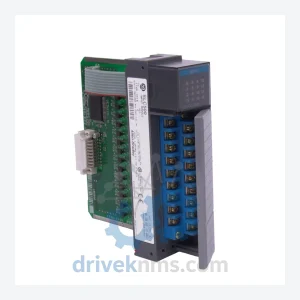
Allen-Bradley 1746-ITV16 is listed for SLC 500 RFQ review. Confirm quantity, condition and destination before quotation.
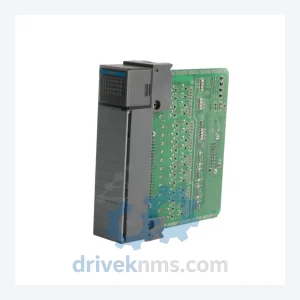
Allen-Bradley 1746-OW4 is listed for SLC 500 RFQ review. Confirm quantity, condition and destination before quotation.