
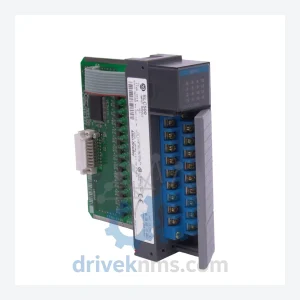
Allen-Bradley 1746-IO12 Combination I/O Module – Obsolete SLC 500 Spare Part
Allen-Bradley 1746-IO12 is listed for SLC 500 RFQ review. Confirm quantity, condition and destination before quotation.
RFQ-ready industrial model
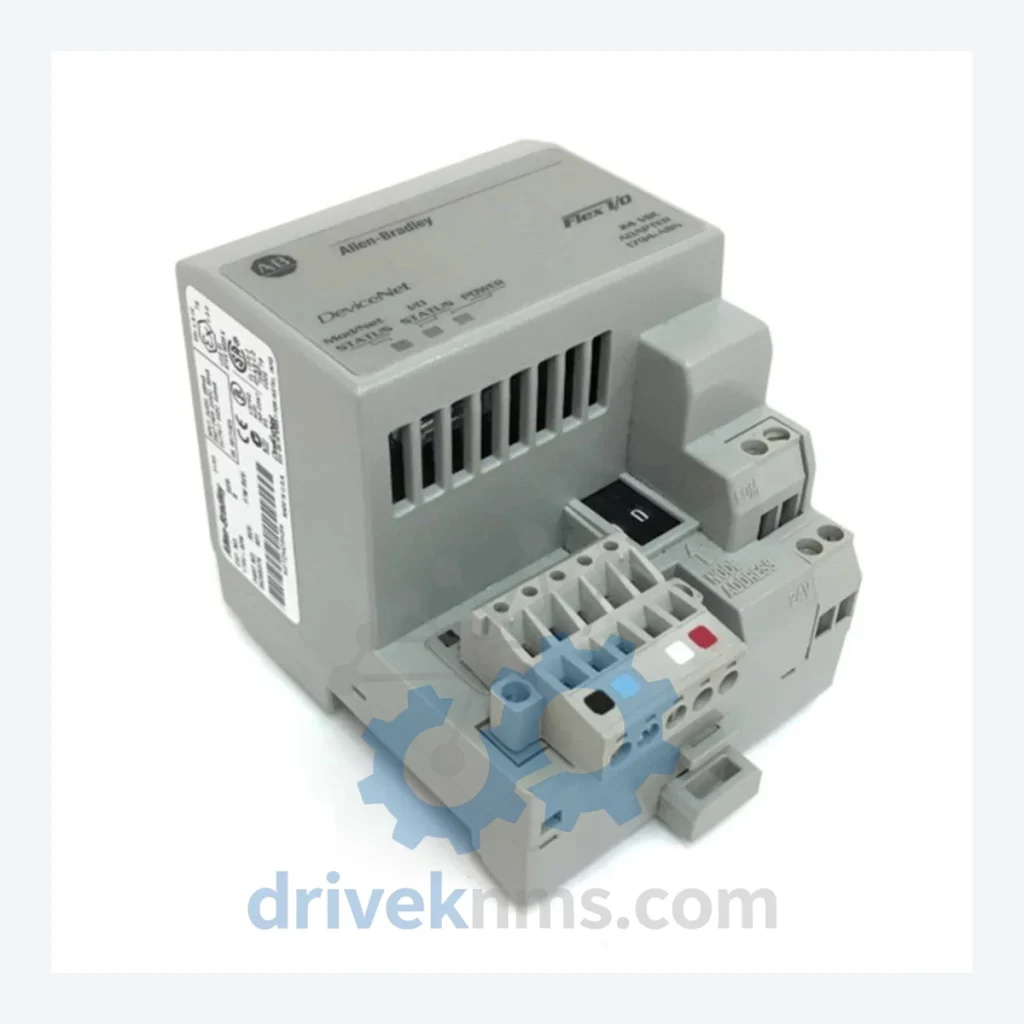
Model: 1794-ADN
Product Overview
Commercial availability is handled through direct RFQ, model verification and export-oriented follow-up rather than public cart checkout.
Datasheet Preview
Use attached product manuals when available. If the manual is not public yet, request the full file directly through RFQ.
Commercial Path
Product pages on DRIVEKNMS are designed to verify model, brand and series first, then move the buyer into one clean quotation path.
Technical Dossier
DriveKNMS reviews sourcing options for this model through RFQ handling before quotation.
RFQ support for obsolete parts: Send the model number, required quantity and destination so DriveKNMS can confirm sourcing options before quotation.
| Parameter | Detail |
|---|---|
| Part Number | 1794-ADN |
| Manufacturer | Allen-Bradley / Rockwell Automation |
| Series | FLEX I/O |
| Module Type | DeviceNet Adapter |
| Network Protocol | DeviceNet |
| Backplane Compatibility | 1794 FLEX I/O Terminal Base |
| Power Supply Voltage | 24V DC (from backplane) |
| Product Status | Discontinued / End-of-Life (Rockwell Automation) |
| Country of Origin | United States |
| Typical Legacy Systems | Allen-Bradley PLC-5, SLC 500, ControlLogix (early generations) with DeviceNet Scanner |
The 1794-ADN serves as the communication gateway between a FLEX I/O backplane and a DeviceNet network. In facilities where DeviceNet remains the primary fieldbus — common in automotive body shops, food processing lines, and material handling systems commissioned before 2010 — this adapter is not a peripheral component. It is the node that makes the entire I/O subsystem visible to the controller.
Sourcing a verified 1794-ADN from the secondary market is the only strategy that preserves the existing architecture, maintains validated control logic, and avoids unplanned capital expenditure. Each operational year gained on the existing system represents a direct deferral of a six- or seven-figure modernization cost.
Plant managers facing system retirement pressure from corporate asset teams often underestimate the leverage that a disciplined spare parts strategy provides. The following approach has been applied successfully in petrochemical, automotive, and discrete manufacturing environments to extend the operational life of legacy Rockwell, Siemens, and ABB control systems by a decade or more:
1. Failure Mode Mapping: Identify the three to five modules in your architecture with the longest mean time to repair (MTTR) — typically communication adapters, power supplies, and analog I/O modules. These are the components whose failure triggers line-wide shutdowns, not just localized faults. The 1794-ADN falls squarely in this category for DeviceNet-based FLEX I/O systems.
3. Firmware Version Control: Discontinued modules often have multiple firmware revisions in circulation. Before procurement, confirm the firmware version required by your DeviceNet scanner configuration. Mismatched firmware can cause node address conflicts or EDS file incompatibilities that delay restoration.
4. Condition-Based Procurement: Do not wait for failure. Procure critical spares during planned maintenance cycles when engineering resources are available to verify compatibility. Emergency procurement under production pressure increases the risk of accepting unRFQ-reviewed sourcing status.
All 1794-ADN units supplied by DriveKNMS undergo a structured 5-step inspection process before dispatch review:
Step 1 – Visual and Mechanical Inspection: Full examination of the housing, backplane connector pins, and DeviceNet port for physical damage, corrosion, or pin deformation. Units with bent or oxidized pins are rejected at this stage.
Step 2 – Electrolytic Capacitor Assessment: Internal capacitors are inspected for signs of electrolyte leakage, bulging, or ESR degradation — the primary failure mode in modules stored beyond 10 years. Units showing capacitor aging are flagged for component-level refurbishment or rejected.
Step 3 – Firmware Version Verification: The firmware revision is read and documented. This information is provided to the buyer to confirm compatibility with their DeviceNet scanner and EDS configuration before dispatch review.
Step 4 – Functional Power-On Test: The module is powered via a 1794 terminal base and verified to initialize correctly, enumerate on the DeviceNet network, and respond to node address configuration.
Step 5 – Packaging and ESD Protection: Units are repackaged in anti-static bags with desiccant and shipped in rigid foam-lined cartons to prevent transit damage.
The 1794-ADN is a direct drop-in replacement for any failed unit within the same FLEX I/O backplane configuration. No changes to the control program, no I/O address remapping, and no DeviceNet network reconfiguration are required — provided the replacement unit carries a compatible firmware revision. This characteristic is the defining advantage of like-for-like spare part replacement over platform migration:
For facilities under IQ/OQ/PQ validation requirements, a like-for-like replacement with documented part number and firmware version is the only change-control-compliant path to restoring operation.
Q: How do I confirm the unit is new or quality-refurbished?
A: Each unit is supplied with an inspection report documenting its condition grade (New Surplus, Refurbished, or Used-Tested), firmware version, and test results. Condition grade is confirmed before order acceptance.
Q: Should I purchase multiple units for long-term inventory?
A: For any facility with more than two 1794-ADN nodes on a critical line, maintaining a minimum of two spare units is the standard recommendation. As secondary market availability of discontinued Rockwell modules continues to decline, procurement costs will increase. Purchasing now at current market rates is a measurable cost-avoidance decision.
Continue The Model Path
Move from this exact model into the matching system hub, brand archive, model-family archive or lifecycle sourcing route before sending a final RFQ list.
Related Paths
Allen-Bradley 1746-IO12 is listed for SLC 500 RFQ review. Confirm quantity, condition and destination before quotation.
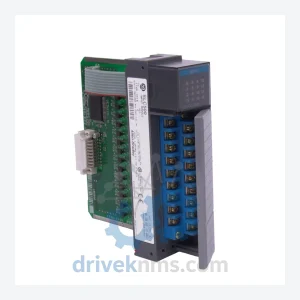
Allen-Bradley 1746-ITV16 is listed for SLC 500 RFQ review. Confirm quantity, condition and destination before quotation.
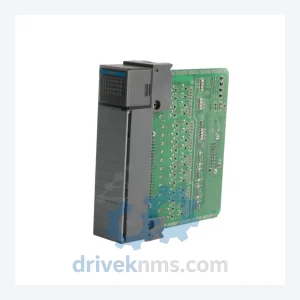
Allen-Bradley 1746-OW4 is listed for SLC 500 RFQ review. Confirm quantity, condition and destination before quotation.