
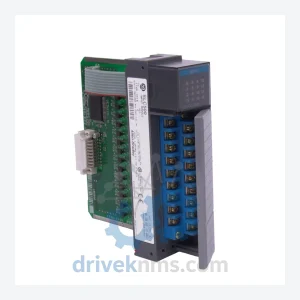
Allen-Bradley 1746-ITV16 DC Input Module – Obsolete SLC 500 Spare Part
Allen-Bradley 1746-ITV16 is listed for SLC 500 RFQ review. Confirm quantity, condition and destination before quotation.
RFQ-ready industrial model
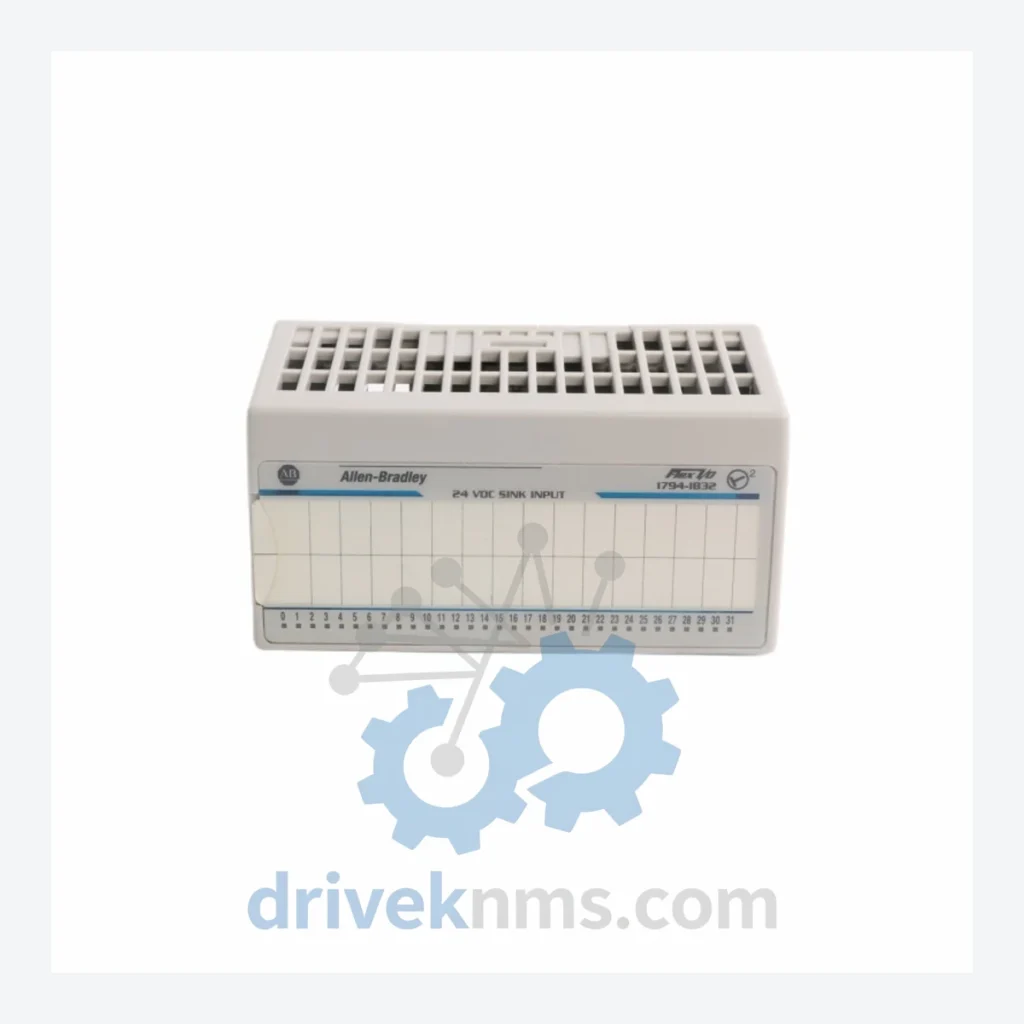
Model: 1794-IB32
Product Overview
Commercial availability is handled through direct RFQ, model verification and export-oriented follow-up rather than public cart checkout.
Datasheet Preview
Use attached product manuals when available. If the manual is not public yet, request the full file directly through RFQ.
Commercial Path
Product pages on DRIVEKNMS are designed to verify model, brand and series first, then move the buyer into one clean quotation path.
Technical Dossier
The Allen-Bradley 1794-IB32 is a 32-point 24VDC digital input module for the FLEX I/O platform. Rockwell Automation has discontinued this module. Replacement within the current FLEX I/O architecture is no longer supported through standard distribution channels. DriveKNMS maintains RFQ-reviewed sourcing status of this module to serve facilities that cannot afford — or are not ready — to abandon their existing control infrastructure.
RFQ support for obsolete parts: Send the model number, required quantity and destination so DriveKNMS can confirm sourcing options before quotation.
| Parameter | Value |
|---|---|
| Part Number | 1794-IB32 |
| Series / Platform | Allen-Bradley FLEX I/O |
| Module Type | Digital Input (DC) |
| Number of Input Points | 32 |
| Input Voltage | 24V DC |
| Backplane Current Draw | 75 mA at 5V DC |
| Communication Interface | FLEX I/O backplane (requires 1794-ADN, -AENT, or compatible adapter) |
| Manufacturer | Rockwell Automation / Allen-Bradley |
| Country of Origin | United States |
| Lifecycle Status | Discontinued / End of Life (EOL) |
| Compatible Systems | Allen-Bradley FLEX I/O racks with 1794-series adapters; commonly deployed in legacy DeviceNet and EtherNet/IP architectures |
The 1794-IB32 was a foundational component in FLEX I/O deployments across automotive assembly, food and beverage processing, water treatment, and discrete manufacturing. Many of these installations were commissioned in the late 1990s and 2000s and were designed with 20-year operational horizons. Those horizons have not expired — but the supply chain for their components has.
When Rockwell Automation discontinued the 1794-IB32, facilities running these systems were left with three options: carry sufficient spare inventory, source from the secondary market, or migrate. Migration is not a decision that can be made in a week. A full FLEX I/O to modern ControlLogix or Micro800 migration requires detailed I/O mapping, program conversion, panel redesign, FAT/SAT testing, and operator retraining. For a mid-size facility, this process routinely takes 12 to 24 months and costs well into six figures before the first line of new code runs in production.
The secondary market — when sourced from a qualified supplier — is the only mechanism that preserves operational continuity without triggering a capital project. DriveKNMS specializes in exactly this function: locating, verifying, and supplying discontinued Rockwell Automation hardware to facilities that need it now.
Plant managers facing system retirement pressure from corporate or engineering teams often underestimate the leverage that a disciplined spare parts strategy provides. The following approach has allowed facilities to defer costly migrations while maintaining full production uptime:
1. Conduct a criticality audit. Identify every 1794-series module in your FLEX I/O racks. Rank them by failure consequence — modules controlling safety interlocks or high-throughput lines carry the highest risk. The 1794-IB32, with 32 input points per module, typically controls a significant share of field device monitoring on any rack it occupies.
2. Establish a minimum spare holding. For discontinued modules with no drop-in modern equivalent, a minimum of two spare units per active module type is a defensible baseline. For high-criticality applications, three units is more appropriate. The cost of holding three 1794-IB32 units is a fraction of a single unplanned shutdown day.
3. Verify firmware compatibility before installation. FLEX I/O adapters have firmware dependencies. Confirm that any replacement 1794-IB32 module is compatible with the firmware version running on your 1794-ADN or 1794-AENT adapter before the module enters your spare parts room — not during an emergency repair.
4. Inspect and condition spare modules annually. Electrolytic capacitors in modules stored for extended periods can degrade. A qualified technician should power-cycle and functionally test spare modules on a scheduled basis to confirm they remain serviceable.
5. Document your I/O configuration. Maintain a current export of your RSLogix or Studio 5000 I/O configuration. In a failure scenario, having this documentation reduces replacement time from hours to minutes.
This approach does not require capital approval. It requires discipline and a reliable source for discontinued hardware. The total cost of a properly managed spare parts program for a FLEX I/O installation is typically less than 2% of the cost of an unplanned migration.
Sourcing discontinued hardware from the secondary market carries legitimate risk. DriveKNMS applies a structured 5-step inspection protocol to every 1794-IB32 unit before it leaves our facility:
Step 1 – Visual and mechanical inspection. Each module is examined for physical damage, connector pin condition, and housing integrity. Modules with bent pins, cracked housings, or evidence of field damage are rejected at this stage.
Step 2 – Electrolytic capacitor assessment. Capacitor aging is the primary failure mode in stored industrial electronics. We assess capacitor condition and flag any units showing visible swelling, leakage, or ESR anomalies.
Step 3 – Firmware version verification. Where accessible, firmware revision is recorded and disclosed. Buyers are advised of any known compatibility constraints with specific adapter firmware versions.
Step 4 – Connector and pin corrosion check. Backplane connectors are inspected under magnification for oxidation or corrosion. Affected contacts are cleaned using appropriate methods; units with structural corrosion are rejected.
Units are shipped in anti-static packaging with condition documentation. We do not misrepresent module condition. New, refurbished, and used-tested units are clearly differentiated in all quotations.
Should I buy one spare or multiple units?
For any discontinued module in active production service, we recommend holding a minimum of two spares. If the 1794-IB32 is deployed across multiple racks or controls critical process inputs, three units is a more defensible position. The cost of a third spare unit is not comparable to the cost of a production stoppage while a replacement is located.
Can you source other discontinued FLEX I/O modules?
Yes. DriveKNMS maintains sourcing relationships for a broad range of discontinued 1794-series modules including output, analog, and specialty modules. Contact us with your full BOM for a consolidated quotation.
Continue The Model Path
Move from this exact model into the matching system hub, brand archive, model-family archive or lifecycle sourcing route before sending a final RFQ list.
Related Paths
Allen-Bradley 1746-ITV16 is listed for SLC 500 RFQ review. Confirm quantity, condition and destination before quotation.
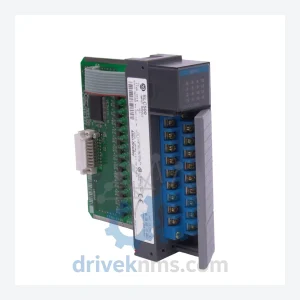
Allen-Bradley 1746-IO12 is listed for SLC 500 RFQ review. Confirm quantity, condition and destination before quotation.
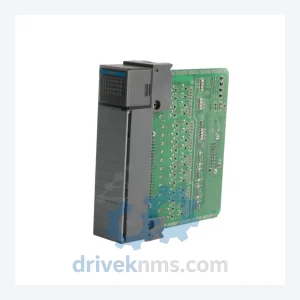
Allen-Bradley 1746-OW4 is listed for SLC 500 RFQ review. Confirm quantity, condition and destination before quotation.