Products / Mitsubishi Electric / J3-350B Servo Amplifier
Mitsubishi Electric J3-350B Servo Amplifier

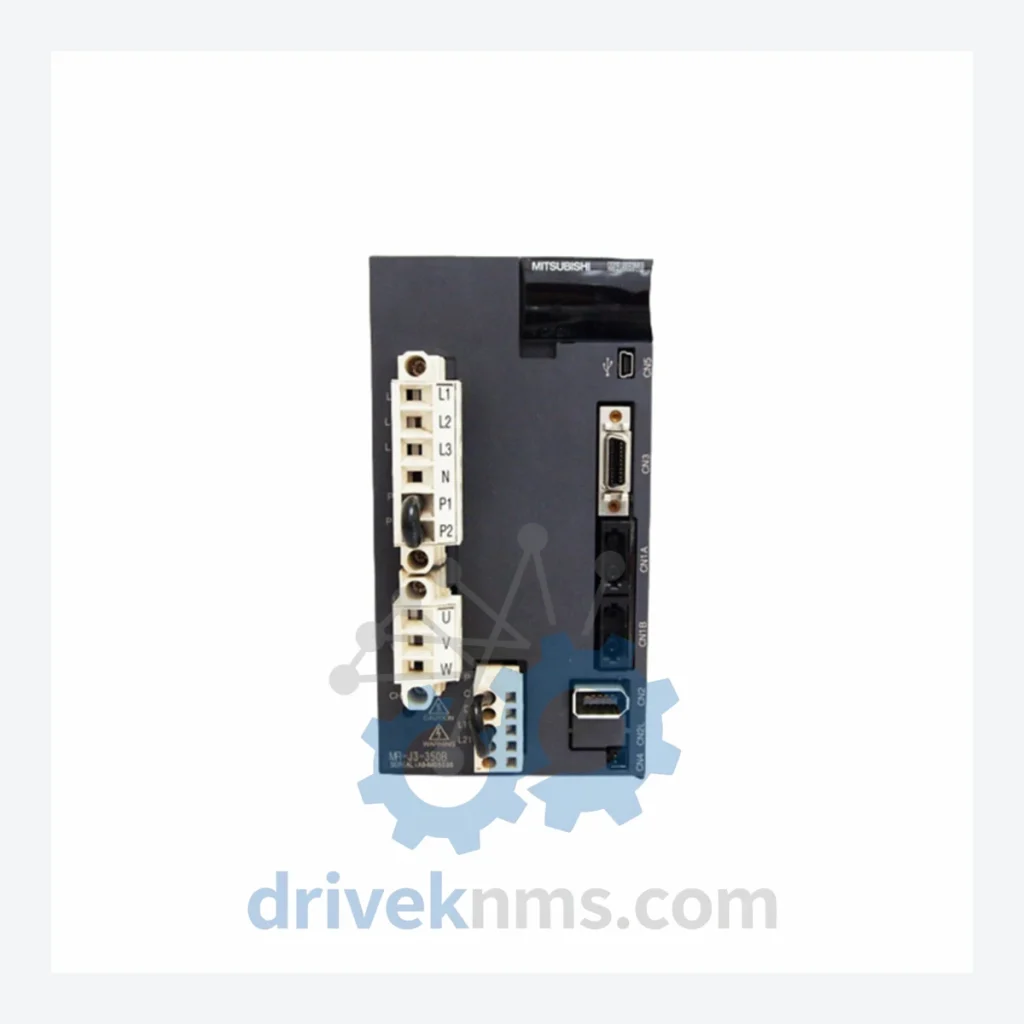
Mitsubishi MR-J3-350B Servo Amplifier – Obsolete MR-J3 Series Spare Part

Model: M-J3-350B

Brand Mitsubishi Electric
Series J3-350B Servo Amplifier
Model M-J3-350B
RFQ-ready model route Obsolete and surplus sourcing Export follow-up by model list

Product Overview

Commercial availability is handled through direct RFQ, model verification and export-oriented follow-up rather than public cart checkout.

Datasheet Preview

Datasheet Preview

Use attached product manuals when available. If the manual is not public yet, request the full file directly through RFQ.

Request Full Manual

Commercial Path

Use This Page To Confirm The Model, Then Move To RFQ

Product pages on DRIVEKNMS are designed to verify model, brand and series first, then move the buyer into one clean quotation path.

Technical Dossier

Product Details And Specifications

Mitsubishi MR-J3-350B Servo Amplifier – Obsolete MR-J3 Series Spare Part

When a servo amplifier fails on a production line built around the Mitsubishi MELSERVO MR-J3 platform, the consequences extend far beyond a single component. A full system migration to MR-J4 or MR-J5 architecture — including new servo motors, cable sets, parameter re-engineering, and PLC program revisions — routinely costs manufacturers between $200,000 and $1,500,000 USD per line, excluding lost production time. The MR-J3-350B is no longer manufactured. Sourcing a verified replacement unit is the only rational path to restoring operations without triggering that capital expenditure.

DriveKNMS maintains allocated stock of the MR-J3-350B for industrial clients who cannot afford system downtime or unplanned capital projects. Each unit is processed through our in-house QA protocol before dispatch.

Technical Specifications

Parameter Value
Manufacturer Mitsubishi Electric
Part Number MR-J3-350B
Series MELSERVO MR-J3
Product Type AC Servo Amplifier (Drive)
Rated Output 3.5 kW
Control Mode SSCNET III (High-speed serial bus, position/speed/torque)
Interface SSCNET III optical fiber network
Compatible Motor Series Mitsubishi HG-SR, HG-MR, HC-SFS (MR-J3 compatible)
Power Supply 3-phase 200–230 VAC, 50/60 Hz
Enclosure Rating IP20
Country of Origin Japan
Production Status Discontinued / Obsolete – No longer manufactured by Mitsubishi Electric
Successor Model MR-J4-350B (requires system-level re-engineering; not a direct drop-in)

Note: Parameters above are based on published Mitsubishi Electric documentation. Electrical parameters should be verified against the original system nameplate and engineering drawings before installation. DriveKNMS does not fabricate specifications.

Solving the Discontinued Hardware Crisis

The MR-J3 series was Mitsubishi Electric's dominant servo platform for over a decade, deeply embedded in automotive body welding lines, semiconductor handling equipment, food packaging machinery, and precision CNC systems worldwide. Its SSCNET III optical communication architecture was a closed, proprietary ecosystem — which means the MR-J3-350B amplifier cannot be replaced by a competitor's drive without a full mechanical and software re-engineering project.

Factory engineering teams facing an MR-J3-350B failure have three options: source a replacement unit, initiate a full system upgrade, or halt production. The upgrade path is not a weekend project. SSCNET III to SSCNET III/H migration requires new servo motors, new cables, updated motion controller firmware, and complete re-commissioning of all axis parameters. For a multi-axis machine, this represents months of engineering hours and significant capital outlay.

The case for maintaining a physical spare of the MR-J3-350B is straightforward: the cost of one unit held in a climate-controlled spare parts cabinet is a fraction of one day of unplanned downtime on a high-throughput production line. Plants operating legacy MELSERVO MR-J3 systems — particularly those with 5 to 15 years of remaining asset life — should treat this amplifier as a critical insurance component, not a discretionary purchase.

How to extend your MR-J3-based automation asset life by 5–10 years:

  • Maintain a minimum 1+1 spare policy for each MR-J3 amplifier model in service. One unit in the machine, one unit on the shelf. For high-criticality axes, consider a 1+2 ratio.
  • Conduct annual servo health checks using Mitsubishi's MR Configurator2 software. Monitor regenerative load ratio, encoder error counts, and alarm history. Early detection of amplifier degradation allows planned replacement rather than emergency sourcing.
  • Protect against capacitor aging. Electrolytic capacitors in servo amplifiers have a finite service life, typically 10 years under rated conditions. Units stored in high-temperature or high-humidity environments degrade faster. Inspect and replace capacitors on a scheduled basis.
  • Preserve firmware version consistency. When replacing an MR-J3-350B, confirm the firmware version of the replacement unit matches the existing system. Mismatched firmware can cause parameter incompatibility and unexpected axis behavior.
  • Document your system configuration. Back up all servo parameters using MR Configurator2 and store copies off-machine. In a failure event, a replacement unit can be commissioned in hours rather than days if parameter files are available.
  • Negotiate long-term supply agreements with specialist distributors. As MR-J3 stock globally diminishes, prices will rise and availability will tighten. Locking in supply now at current market rates is a defensible procurement decision.

Condition & Reliability Assurance

DriveKNMS applies a 5-step QA protocol to all obsolete servo amplifier units before dispatch. This process is designed specifically for legacy hardware where manufacturing support no longer exists and field failure carries disproportionate operational risk.

  • Step 1 – Visual and Mechanical Inspection: Full external inspection for physical damage, corrosion on terminal blocks, connector pin condition, and enclosure integrity. Units with compromised housings are rejected.
  • Step 2 – Electrolytic Capacitor Assessment: Internal capacitors are tested for capacitance value, ESR (equivalent series resistance), and leakage current. Capacitors showing degradation beyond acceptable tolerance are replaced with equivalent-rated components before the unit is offered for sale.
  • Step 3 – Firmware Version Verification: The amplifier's firmware version is read and documented. This information is provided to the buyer to confirm compatibility with their existing system configuration before shipment.
  • Step 4 – Pin and Connector Corrosion Check: All I/O connectors, encoder connectors, and power terminals are inspected under magnification for oxidation, pin deformation, and contact resistance. Affected contacts are cleaned or the unit is downgraded.
  • Step 5 – Functional Power-On Test: Where test equipment permits, units are powered and basic servo enable/disable sequences are verified. Alarm codes are read and cleared. Units that cannot pass a clean power-on sequence are not offered as operational spares.

Key Features for System Maintenance

  • Drop-in replacement: The MR-J3-350B installs directly into existing MR-J3 system wiring and SSCNET III network topology. No rewiring, no new cables, no changes to the motion controller configuration.
  • No reprogramming required: Servo parameters are stored in the amplifier's non-volatile memory. Restoring a backed-up parameter file via MR Configurator2 takes minutes. If no backup exists, parameters can be re-entered manually from the original commissioning sheet.
  • Avoids engineering reconstruction costs: Substituting a like-for-like MR-J3-350B eliminates the need for motion program rewriting, mechanical re-coupling for different motor frame sizes, and PLC I/O remapping — all of which are mandatory in a cross-generation upgrade.
  • Maintains production continuity: A verified replacement unit allows maintenance teams to restore a failed axis within a single shift, rather than waiting weeks for engineering resources and new-generation hardware procurement.

FAQ

Q: What warranty applies to an obsolete MR-J3-350B unit?
A: DriveKNMS provides a 90-day operational warranty on all QA-processed units. This covers failure under normal operating conditions. Warranty does not cover damage resulting from incorrect installation, overvoltage events, or use outside the unit's rated parameters.

Q: How do I confirm the unit is genuine and not counterfeit?
A: All units supplied by DriveKNMS are sourced from verified industrial channels — decommissioned equipment, authorized distributor excess stock, and factory-sealed old stock. We provide the unit's serial number and firmware version prior to shipment on request, allowing buyers to cross-reference with Mitsubishi Electric's production records where applicable.

Q: Should I buy multiple units as long-term spares?
A: For any production line with more than two MR-J3-350B amplifiers in service, holding at least one spare unit is a minimum prudent position. Given the accelerating depletion of global MR-J3 inventory, plants with a 5–10 year operational horizon for their existing equipment should consider securing two to three units now. The cost of storage is negligible relative to the cost of an unplanned line stoppage.

Q: Can you source other MR-J3 series amplifiers?
A: Yes. DriveKNMS specializes in the full MR-J3 range. Contact us with your specific model number for availability and lead time.

© 2026 DriveKNMS. (Status: DRAFT)

WhatsApp Prefilled Inquiry Email [email protected] Phone +86 18359293191 Top Back To Top