
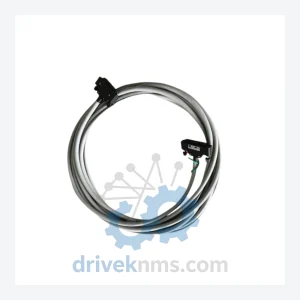
YOKOGAWA KS1 Series Signal Cables KS1*B
Yokogawa KS1*B is listed for DCS Cards RFQ review. Confirm quantity, condition and destination before quotation.
RFQ-ready industrial model
Model: ST4*D AS S9191AQ-0
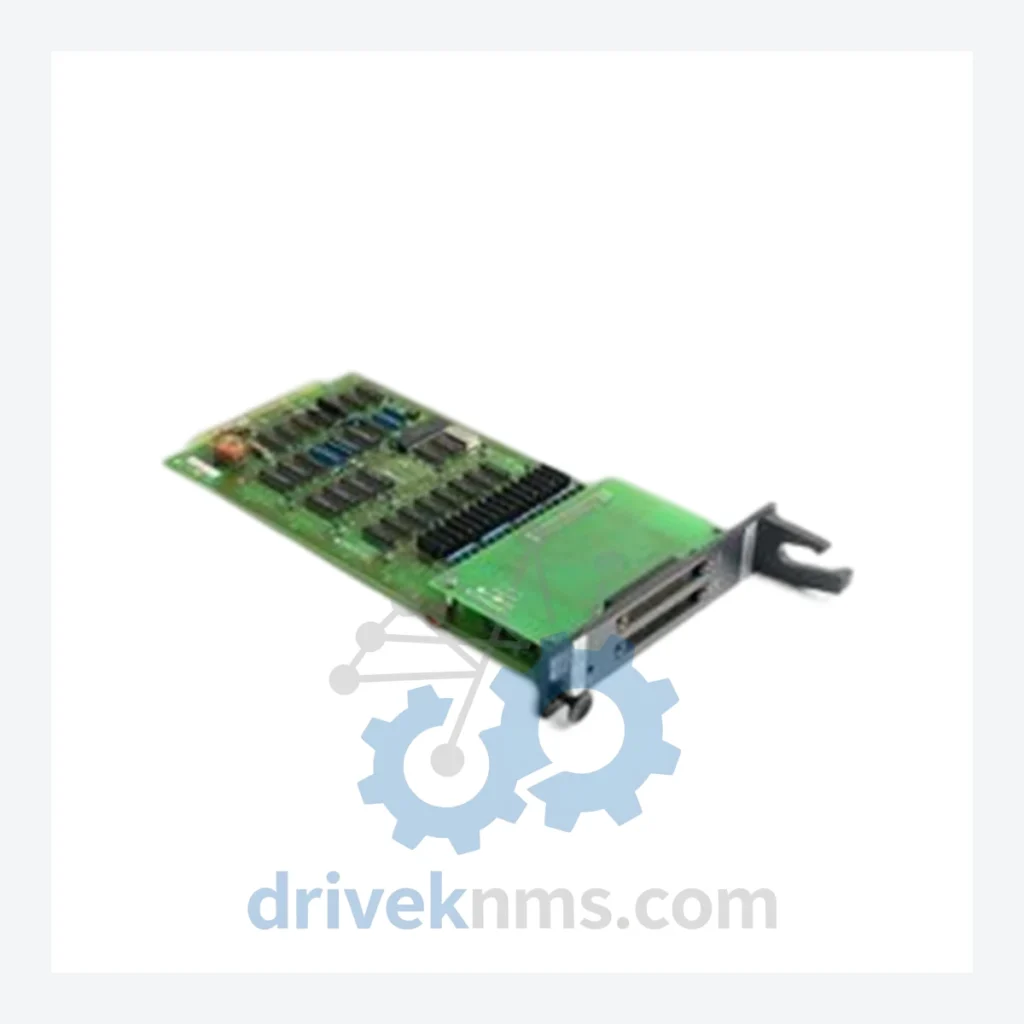
Product Overview
Commercial availability is handled through direct RFQ, model verification and export-oriented follow-up rather than public cart checkout.
Datasheet Preview
Use attached product manuals when available. If the manual is not public yet, request the full file directly through RFQ.
Commercial Path
Product pages on DRIVEKNMS are designed to verify model, brand and series first, then move the buyer into one clean quotation path.
Technical Dossier
The Yokogawa ST4*D series represents a core I/O module family within the Yokogawa STARDOM FCN/FCJ autonomous controller platform, widely deployed across global heavy industry including petrochemical complexes, nuclear power auxiliary systems, offshore oil & gas platforms, and large-scale refinery distributed control architectures. The ST4*D designation covers a range of status input, analog input/output, and digital I/O cards engineered to interface directly with the FCN/FCJ controller backplane via the STARDOM internal bus. These modules are designed for continuous-duty industrial environments, conforming to IEC 61131-3 programming standards and supporting FOUNDATION Fieldbus, HART, and standard 4–20 mA signal chains depending on variant. Installed base across Asia-Pacific, Middle East, and European process industries remains substantial, making long-term parts availability a critical operational concern for plant maintenance teams.
The ST4*D module family was introduced as part of Yokogawa's STARDOM platform, which itself emerged in the early 2000s as a mid-tier autonomous controller bridging the gap between full-scale CENTUM VP DCS deployments and standalone PLC installations. Early ST4*D variants were designed around a parallel backplane bus architecture with fixed-slot addressing, requiring manual DIP-switch configuration for node ID assignment. Subsequent hardware revisions introduced auto-addressing via the FCN controller firmware, reducing commissioning time and eliminating address conflicts in multi-drop configurations.
As the STARDOM platform matured through the FCN-100, FCN-500, and FCJ controller generations, the ST4*D I/O modules evolved in parallel: channel density increased, isolation ratings were upgraded to meet IEC 61010-1 Category II requirements, and conformal coating became standard on PCB assemblies destined for high-humidity or corrosive-atmosphere installations. The AS S9191AQ-0 suffix on the subject SKU denotes a specific hardware assembly revision and option code within the ST4*D multi-status input card family, indicating a 16-channel dry-contact or wet-contact status input configuration with standard 24 VDC field wiring compatibility.
With the broader Yokogawa portfolio transitioning toward CENTUM VP R6 and the OpreX Control and Safety System architecture, the ST4*D series has entered a mature/end-of-active-production phase. Yokogawa continues to provide repair and limited spare parts support under its lifecycle management program, but new production runs are no longer guaranteed. This makes third-party MRO sourcing an operationally necessary strategy for plants committed to STARDOM-based control architectures through their next major turnaround cycle.
The following SKUs represent verified, commonly referenced part numbers within the Yokogawa ST4*D and associated STARDOM FCN/FCJ I/O module catalog. Modules are classified by functional type:
Status Input / Digital Input Modules
Analog Input Modules
Analog Output Modules
Communication & CPU Modules
For plants operating STARDOM FCN/FCJ systems beyond their original design life — a common scenario in refineries and chemical plants with 20–30 year asset horizons — DriveKNMS provides lifecycle extension support including: module-level repair with component-level traceability, firmware version matching to ensure backplane compatibility with existing FCN controller revisions, and batch procurement to support planned maintenance shutdowns without single-point-of-failure exposure on critical I/O channels.
The ST4*D module family presents specific quality verification challenges due to its backplane-dependent communication architecture. Functional testing of ST4*D I/O modules cannot be performed in isolation — each module must be validated within a live FCN or FCJ controller chassis with active backplane bus communication to confirm correct slot recognition, channel-level I/O response, and firmware handshake integrity.
DriveKNMS operates a dedicated STARDOM FCN test bench configured with multiple controller revisions to accommodate the full ST4*D hardware generation range. Test procedures for status input cards such as the AS S9191AQ-0 include: channel-by-channel contact closure verification across all 16 inputs, isolation resistance measurement between field wiring terminals and backplane ground (minimum 100 MΩ at 500 VDC), and bus communication stress testing under simulated high-scan-rate conditions. Analog modules undergo additional calibration verification at 0%, 25%, 50%, 75%, and 100% of rated input/output span, with results logged against module serial number for full traceability.
Continue The Model Path
Move from this exact model into the matching system hub, brand archive, model-family archive or lifecycle sourcing route before sending a final RFQ list.
Related Paths
Yokogawa KS1*B is listed for DCS Cards RFQ review. Confirm quantity, condition and destination before quotation.
Yokogawa AIP512 is listed for CENTUM Series RFQ review. Confirm quantity, condition and destination before quotation.
Yokogawa SR1B-045N-1KC is listed for CENTUM Series RFQ review. Confirm quantity, condition and destination before quotation.