The replacement drive has the right power rating, yet the cabinet door will not close comfortably once the cables are dressed. Or the unit fits, but a cable duct occupies the space needed for cooling. These are foreseeable engineering problems that a quotation based only on kilowatts cannot reveal.
Danfoss’s published SPS 2026 program, for the November 24-26 exhibition, emphasizes modernization of installed drive systems. That is a useful prompt for legacy plants, but not an announcement that a new drive is a direct replacement for every older model. Before a VLT 2800 installation becomes a retrofit project, describe the cabinet that the replacement must inhabit.
Record the space that is usable, not merely empty
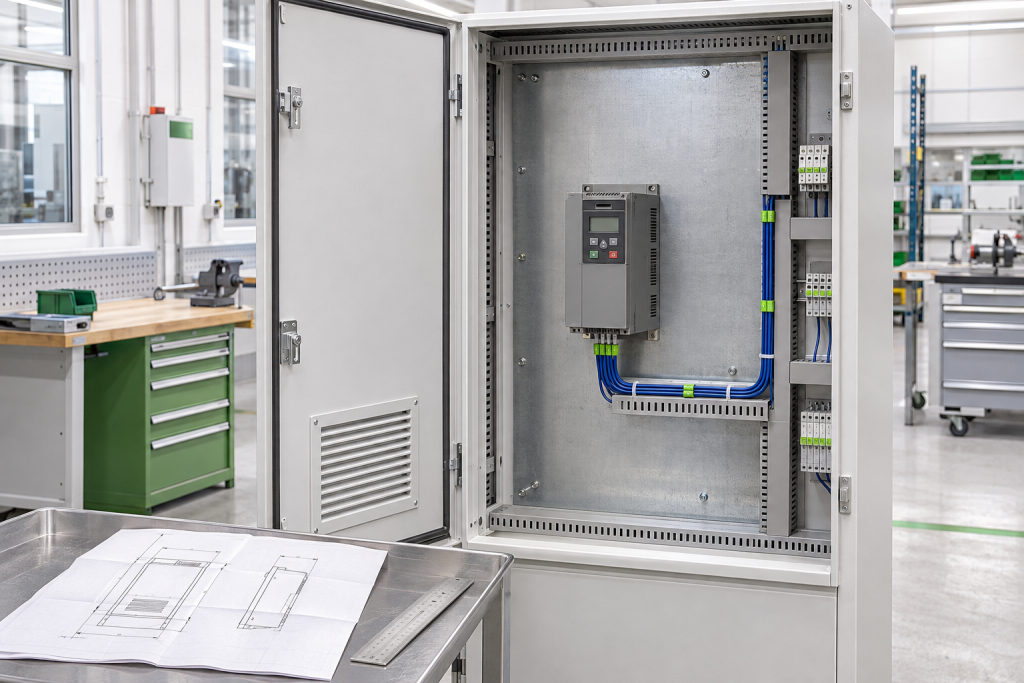
A photograph taken square to the cabinet is helpful, but it does not establish installation depth. Capture the mounting arrangement, adjacent equipment, cable entry, terminal access and door-mounted components through the site’s authorized inspection process. Measurements near electrical equipment belong to qualified personnel under the required isolation procedure. Do not put a ruler into an energized cabinet to complete a buying enquiry.
Distinguish the enclosure dimensions from the available envelope for the drive and its associated components. Terminal covers, connectors and cable bends occupy space beyond a bare housing. A replacement that needs another accessory can also change the arrangement. The most useful drawing shows these constraints instead of presenting the backplate as an unobstructed rectangle.
At this stage, the Danfoss VLT 2800 spare listing is a route to discuss the installed requirement, not a complete selection specification. Send the full type code and the cabinet evidence. A family-level listing cannot establish the correct supply, enclosure, options or suitability for a particular motor application.
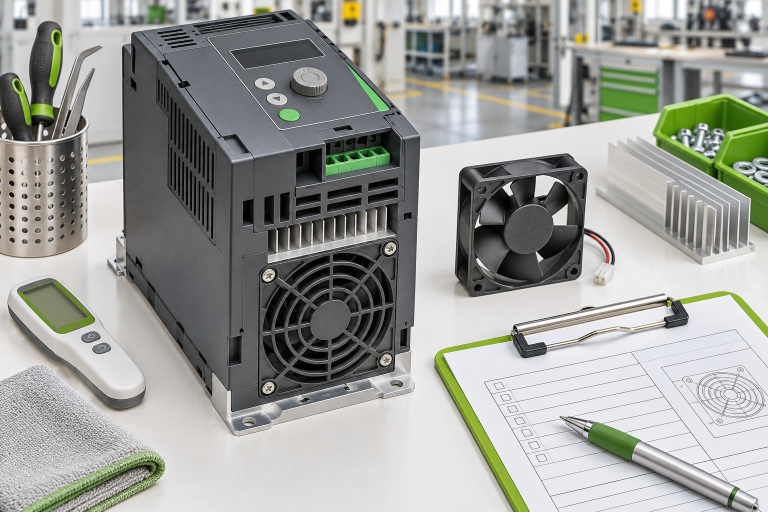
Cooling clearance belongs in the comparison
The legacy VLT 2800 design guide specifies free space above and below the unit for air circulation and distinguishes the spacing implications of its IP21 solution. That distinction matters: a general statement about side-by-side mounting must not be detached from the enclosure conditions to which it applies.
Use the exact installed and proposed product documentation for the final layout. Do not carry the old unit’s clearance assumptions across to a different platform. The relevant question is not whether the replacement is physically smaller. It is whether the complete arrangement satisfies the new unit’s environmental, installation and service requirements.
Also record changes made since the cabinet was commissioned. An added network switch, power supply or filter may have consumed space that the original drawing left free. Dust loading, blocked ventilation and failed enclosure cooling require their own maintenance assessment. Buying a smaller drive does not automatically correct those conditions.
A short shutdown needs a complete work package
There are two legitimate routes: retain a correctly identified legacy spare for a controlled repair, or prepare an engineered migration. They have different deliverables. A like-for-like spare still requires condition assessment and recovery verification. A migration may need changes to mounting, wiring, protection, communications or software, with approval before the outage.
The first route is not automatically economical forever. The second is not automatically faster because the hardware is newer. Ask the maintenance planner to identify which activities can be completed before the line stops and which require access to the installed cabinet. This turns a vague modernization ambition into a realistic execution plan.
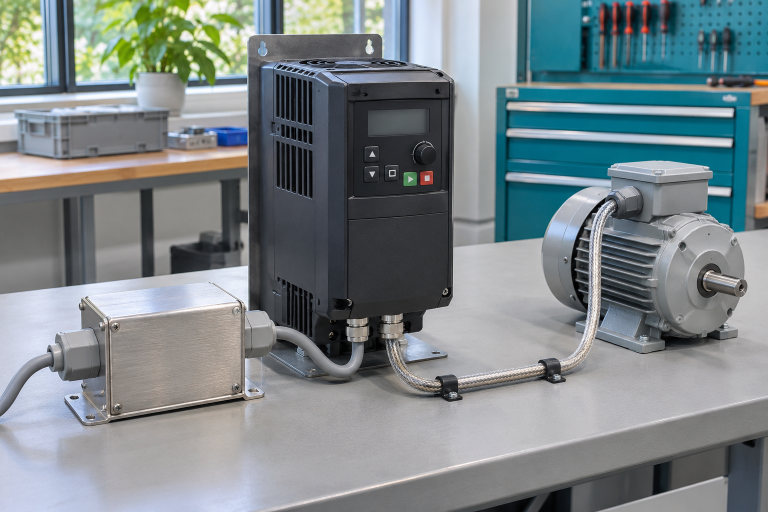
List the non-drive materials explicitly in that plan. Depending on the approved design, these might include mounting hardware, cable termination components, identification markers or enclosure work. Do not assume that everything visible in a catalog photograph is supplied. Equally, do not order extra electrical components without the responsible engineer’s selection.
Plan the removed equipment’s destination as well. Keep its identity and fault history associated with it, whether it is going for evaluation, being retained as evidence or entering the site’s disposal process. A rushed exchange can lose useful information when the old unit is returned without a documented handover.
Compare proposals on the same boundary
A useful supplier response separates the hardware offer from engineering services. It should identify the exact unit, condition, included accessories and the limits of any testing. A photograph of a powered display is not evidence that the proposed drive fits the cabinet, communicates with the controller or performs the machine’s required sequence.
For a retrofit proposal, ask who owns the dimensional review and who approves the revised drawings. For a legacy-spare proposal, ask how the supplied unit’s type code and condition will be verified. This keeps two different offers comparable without pretending they deliver the same scope.
A simple acceptance record can follow the work from quotation to return to service: identification approved, installation package approved, hardware received, site checks completed and operating release authorized. Each stage needs an owner. The sequence is a planning framework, not a substitute for the manufacturer instructions or the site’s electrical safety rules.
Questions before approving the purchase
Is matching the old drive’s kW rating enough?
No. The application also depends on the electrical ratings, overload requirements, control interfaces, environmental conditions and approved installation. Mechanical fit is an additional check, not a replacement for those technical comparisons.
Can a smaller replacement use the old ventilation gaps?
Not without checking its own installation requirements. Housing size alone does not determine the required cooling envelope, accessory space or cable access. Review the exact proposed type and enclosure arrangement.
Does the SPS program mean the VLT 2800 has a new lifecycle deadline?
The event program is not a lifecycle notice for the installed drive. Obtain product-specific lifecycle and service information separately. This article uses the event as modernization context, not as evidence of a fresh discontinuation.
What evidence helps DriveKNMS assess the spare request?
Provide the complete nameplate, motor and supply information, relevant options, cabinet photographs and the approved dimensional constraints. State whether the requirement is a legacy spare or an engineered replacement so the quotation addresses the correct scope.
For a VLT 2800 sourcing enquiry, send those details to sale@driveknms.com or +86 18359293191. You can also use the DriveKNMS enquiry page. A well-defined cabinet constraint is inexpensive to communicate before ordering and costly to discover during the outage.
Image: AI-generated editorial illustration, not an exact product photograph or installation reference.
© 2026 DriveKNMS. All rights reserved. Official Website: https://driveknms.com Inquiry: sale@driveknms.com | WhatsApp/Tel: +86 18359293191