A new drive platform can improve a machine builder’s options without changing the spare-parts answer for an existing production line. That distinction matters as factories add battery-powered transport to sites already full of fixed, cabinet-mounted motion systems. Both may be described as servo drives. They may even come from the same manufacturer. Their recovery requirements can still belong in completely separate stores and maintenance plans.
On November 2, 2026, Siemens announced its SINAMICS E210 converter and SIMOTICS E-1EE1 servomotors for extra-low-voltage applications. The announcement addresses 24 V and 48 V mobile systems, including AGVs and AMRs. It is relevant to fleet expansion, but it is not an announcement that an installed SINAMICS S120 cabinet can accept those components as replacements. Nor does it establish an S120 end-of-support date.
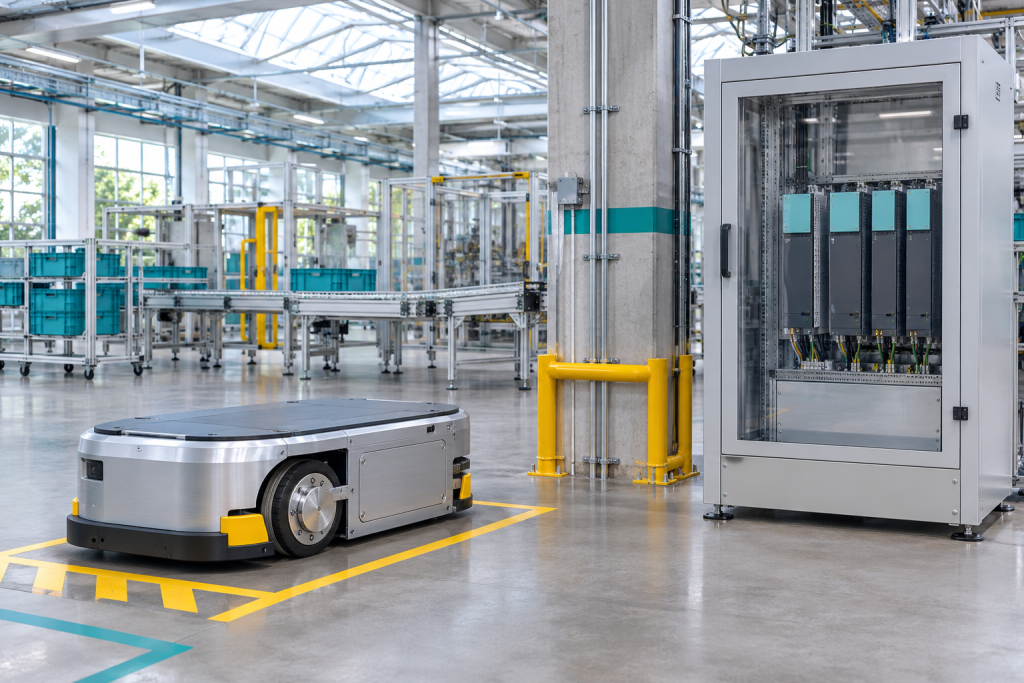
One factory, two electrical recovery plans
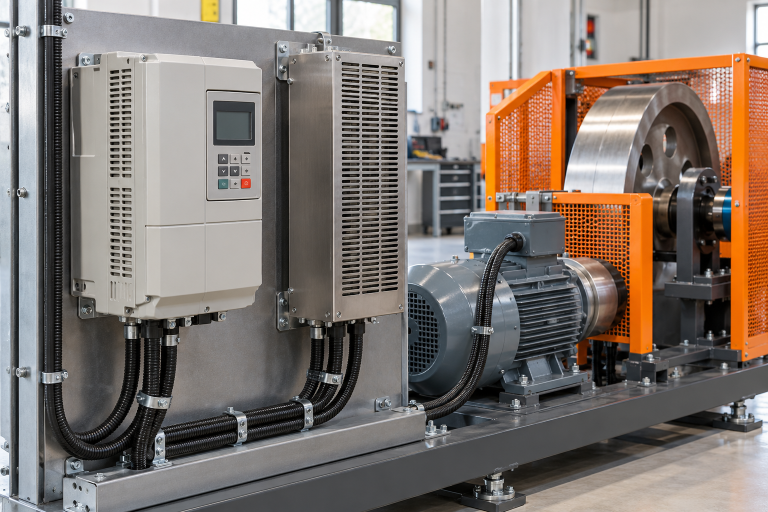
The practical lesson is to classify assets by power architecture before consolidating spare stock. A battery-fed mobile platform has different boundaries from a stationary system organized around a line supply, DC link, motor modules, and coordinated axes. Similar motor power or a shared brand is not sufficient evidence of interchangeability. Even the word drive can mean the entire assembly to one buyer and only a replaceable power module to another.
For example, an installed S120 position using a 6SL3120-1TE21-8AD0 Single Motor Module needs an identification-led spare decision for that position. A requirement for a 6SL3130-7TE23-6AA3 Active Line Module concerns a different part of the installed architecture. Listing both under generic servo spares conceals rather than simplifies the recovery plan. Neither product link implies suitability for the newly announced mobile platform.
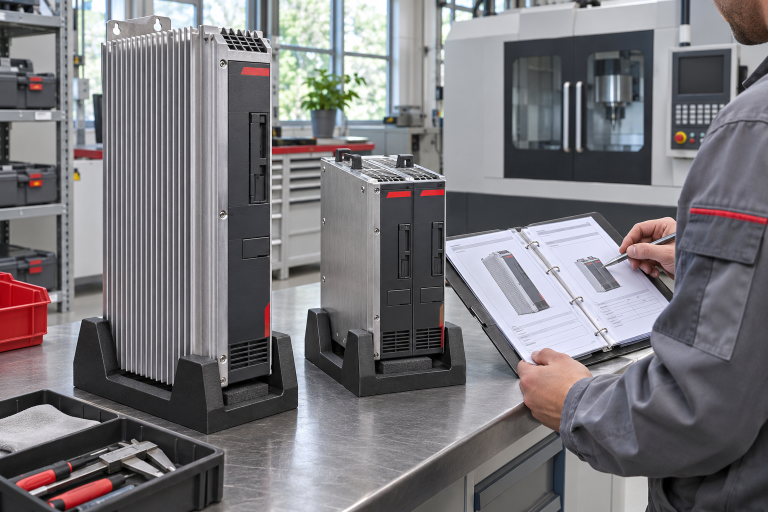
Siemens’ S120 catalog D 21.4 distinguishes these system component roles and the electrical ratings of the booksize hardware. Use the relevant current manual, full order number and installed revision for an actual replacement assessment. A historical catalog helps explain the architecture; it should not be treated as today’s availability promise.
Why a shared inventory description becomes expensive
Imagine a hypothetical warehouse record that says Siemens servo drive, one spare. A machine stops, the part is issued, and the team discovers that the stocked component belongs to a transport platform rather than the production machine. The purchasing decision may have been reasonable at the time, but the record failed to preserve the asset boundary. Recovery time is now spent identifying hardware instead of executing the approved repair.
A better record identifies the machine or fleet, the component’s role, its electrical family, its full ordering code, and the engineering owner. It also distinguishes a ready-to-issue spare from a unit awaiting inspection, configuration, or supplier clarification. Those states matter more than a reassuring total quantity. A physically present component with unresolved identity should not be counted as immediate recovery coverage.
The new-platform question is about support ownership
When evaluating mobile equipment, ask who will own the complete recovery package after commissioning. The fleet integrator may retain application software, parameter sets, or service tooling that the plant does not yet hold. Establish how those records will be maintained, who can restore a failed unit, and what evidence a replacement requires. These are procurement questions to resolve before acceptance, not after the first outage.
For existing stationary equipment, keep the current recovery package intact while the new fleet is introduced. Do not withdraw a critical cabinet spare because a broader automation investment is underway. A modernization budget and a maintenance stock budget solve different problems. The first may reduce future technical debt; the second protects the installed equipment during the transition. Combining them is useful only when a documented migration actually removes the old dependency.
Build separate acceptance criteria
A supplier’s functional test should describe the component tested and its test boundary. A power-stage check is not proof of the complete machine’s motion behavior, and a communication connection is not proof that the application has been recovered. State whether a quotation covers the hardware alone, verified accessories, repair, exchange, or a documented test service. Avoid leaving the interpretation of complete drive until delivery.
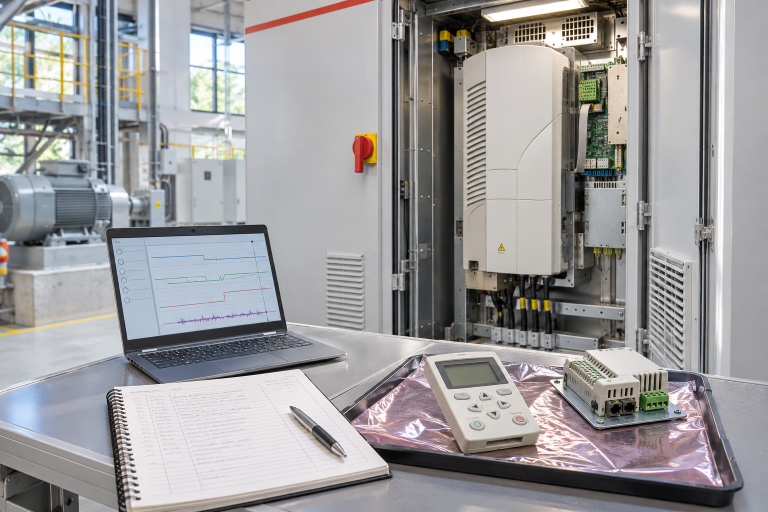
At the plant, returning equipment to service remains a controlled task for qualified personnel using the manufacturer’s procedures. Both battery systems and high-voltage drives can present serious energy hazards. An extra-low-voltage designation does not make a mobile system free of electrical, stored-energy, or unexpected-motion risks. This article defines spare-planning boundaries; it is not a procedure for opening enclosures, discharging a DC link, or changing safety parameters.
Use a purchase review that answers three different questions
First, what exact installed component are we covering? This establishes identity. Second, what else is needed to recover the asset? This identifies software, accessories, qualified labor and acceptance testing. Third, is the proposed purchase a like-for-like spare or part of an approved redesign? This prevents a sales description such as newer generation from silently changing the engineering scope.
Record the answer with the quotation and receiving inspection. For high-consequence equipment, preserve photographs of the delivered identification and any stated test conditions. Do not treat an online listing as confirmation of present stock, delivery time, or manufacturer support. Ask for those details explicitly. Clear evidence makes it easier to compare suppliers without reducing the decision to price alone.
Questions for the maintenance planner
Does the E210 launch make S120 spares obsolete?
No such conclusion follows from this announcement. The new platform targets a different application space. Determine an installed S120 item’s lifecycle from its specific manufacturer record, not from unrelated product-launch news.
Can equal motor power justify sharing a spare?
No. Power alone omits supply architecture, component role, feedback, interfaces, software and approved machine configuration. Shared stock needs a documented compatibility decision for the exact installed assets.
Should the AGV integrator supply the spare package?
Ask the integrator to define it and identify the required recovery resources. The commercial arrangement can vary, but ownership of software, service access and acceptance responsibilities should be explicit before handover.
What information does DriveKNMS need for an S120 inquiry?
Provide the full order number, revision, machine role, fault description, required condition and whether accessories or test records are included. Name the existing component rather than requesting a universal replacement drive.
For a scoped S120 spare quotation, send that identification to sale@driveknms.com. DriveKNMS can discuss the sourcing requirement while your engineering team retains responsibility for application compatibility and recommissioning.
Image: AI-generated editorial illustration, not an exact product photograph or installation reference.
© 2026 DriveKNMS. All rights reserved. Official Website: https://driveknms.com Inquiry: sale@driveknms.com | WhatsApp/Tel: +86 18359293191