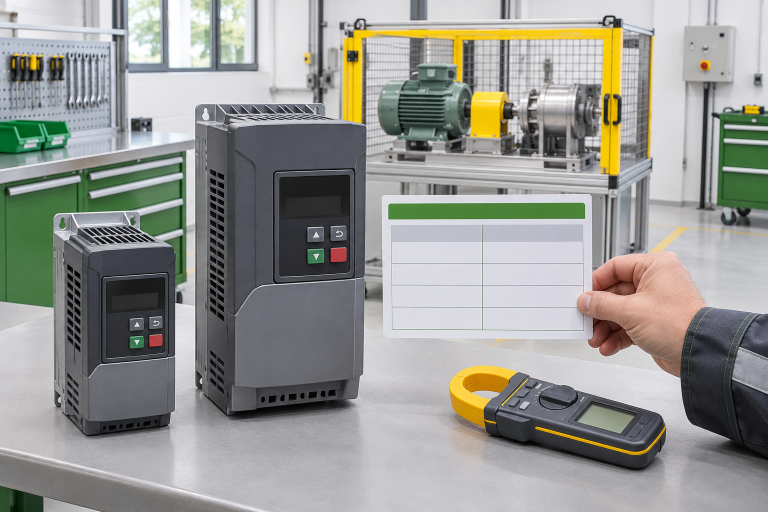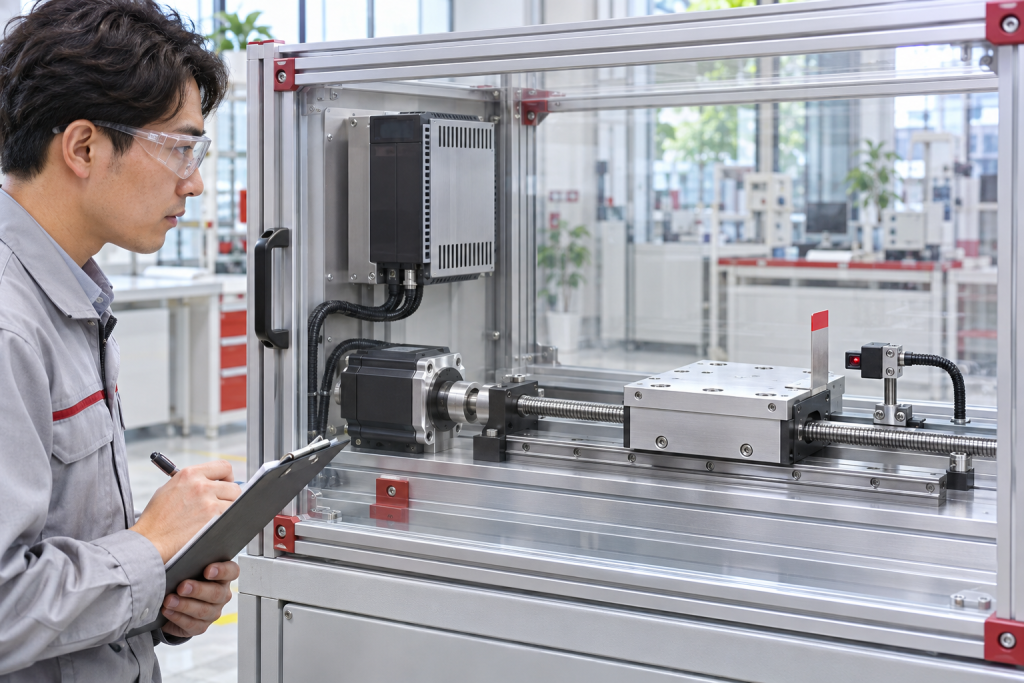
A replacement servo amplifier can communicate normally while the machine’s position reference remains unproven. This is particularly important on an absolute-position axis: the controller may display a coordinate, but maintenance still needs evidence that the coordinate corresponds to the intended physical location.
For Mitsubishi MR-J3-B spare planning, separate hardware recovery from home-reference recovery. They belong in the same outage plan, but they are not the same acceptance test. The following is an engineering handover guide, not a procedure for live battery replacement or an instruction to move a machine after an alarm.
What the absolute system preserves
Mitsubishi’s servo and motion-controller hardware training material explains the battery-backed absolute-position arrangement and warns that disconnecting an encoder cable can lose absolute data for some motors. The MR-J3-B instruction manual is the model-specific reference for applicable alarms, batteries and recovery requirements. These documents are established technical references, not a new lifecycle announcement.
The useful distinction is between an amplifier’s parameters, encoder-related position information and the machine builder’s reference-setting process. Keeping one does not prove the other two. A parameter file can describe gains and application settings without demonstrating that a tool, slide or fixture occupies the expected physical position.
That is why the recovery plan must identify the motor and controller as well as the amplifier. A maintenance note that says only battery changed or drive replaced is too narrow to explain the state of the complete axis.
Start the RFQ with the installed axis
If the installed label identifies an MR-J3-70B servo amplifier, use that full reference and readable photographs in the request. Record the associated motor, encoder cable, controller axis assignment and relevant machine-builder documentation. Do not substitute another family member simply because the connector arrangement looks familiar.
A larger MR-J3-350B amplifier belongs to a separately identified application. It is not an automatic upgrade for a smaller axis. Maintaining separate records for these references prevents a buyer from treating the MR-J3-B suffix as a complete compatibility specification.
Ask what the proposed delivery includes. A bare amplifier, a battery, connectors and an application-specific parameter service are different commercial items. Specify condition and test evidence clearly, but do not let a broad tested description replace the machine team’s responsibility for installation and positioning acceptance.
Capture the event before it becomes a theory
Write down the exact displayed indication, when it first appeared and what happened immediately beforehand. Distinguish a planned shutdown from an unexpected loss of power, a disconnected cable from an untouched harness, and a replaced component from a reset-only attempt. These observations help the responsible engineer assess the recovery path without assuming every position problem is an amplifier defect.
Preserve the chronology. Repeated resets can make the original sequence harder to establish, even when later screens look normal. Keep available diagnostic records and configuration files with their dates and source devices. Mark any uncertainty directly: unknown battery age is a useful fact; an invented installation date is not.
Also record mechanical work. A removed coupling, changed belt, moved sensor or altered fixture may affect the relationship between a coordinate and the mechanism. Electronics documentation cannot explain an undocumented mechanical change. The handover should allow electrical and mechanical personnel to reconcile their work before the axis is released.
Define the reference acceptance before the outage
The machine builder’s approved procedure should define how a reference is established and verified. Maintenance planning should identify the required personnel, permitted machine state, guarding, travel constraints, tools and evidence. Do not improvise a home-return sequence from a generic drive manual when the machine includes gravity loads, tools, coupled axes or inaccessible travel limits.
A useful acceptance sheet separates several observations: the amplifier identity matches the approved request; the controller recognizes the intended axis; the approved parameter baseline is accounted for; the machine reference is established as required; and the physical position checks meet the builder’s criteria. These are separate sign-off fields because one successful communication check cannot close them all.
Plan time for reconciliation rather than assuming that a ready indication means production can restart immediately. Where an absolute-data event requires reference recovery, the responsible team needs access to the approved method and its acceptance limits. A spare on the shelf shortens hardware procurement, not necessarily the entire recovery process.
Keep the spare record usable next time
After an authorized repair, retain the offered unit’s serial number, received condition, configuration source and signed acceptance record. Record which cables and accessories were reused and which were replaced. Keep the final axis documentation separate from the failed unit’s diagnostic folder, with cross-references between them.
Send DriveKNMS the complete MR-J3 reference, motor identification, label photographs and your required delivery scope when requesting a quotation. Ask the sourcing team to resolve hardware identity and documentation questions before dispatch. The machine owner should retain approval of reference-setting, motion testing and return to production.
Frequently Asked Questions
Does restoring the parameter file restore the machine origin?
It does not prove it. Parameters, absolute-position information and the physical machine reference are different evidence categories. Follow the applicable machine-builder and Mitsubishi instructions, then document the required physical acceptance checks before release.
Can we disconnect the encoder cable without considering position data?
No. Mitsubishi documents data-loss consequences for applicable motor arrangements. Identify the exact motor and system first. Cable work needs the approved isolation and recovery procedure; do not assume that every absolute encoder preserves its reference under the same conditions.
Is a battery warning proof that the amplifier must be replaced?
No. The indication needs interpretation using the exact manual and diagnostic context. Preserve the alarm history and component identities. Qualified personnel should determine the fault and required action rather than ordering an amplifier solely from a general warning description.
What should procurement request besides the amplifier number?
Request label photographs, revision information, delivery contents and defined test evidence. Supply the motor and controller context to the responsible technical reviewer. Make any proposed deviation explicit instead of accepting a visually similar unit as a confirmed substitute.
Image: AI-generated editorial illustration, not an exact product photograph or installation reference.
© 2026 DriveKNMS. All rights reserved. Official Website: https://driveknms.com Inquiry: sale@driveknms.com | WhatsApp/Tel: +86 18359293191