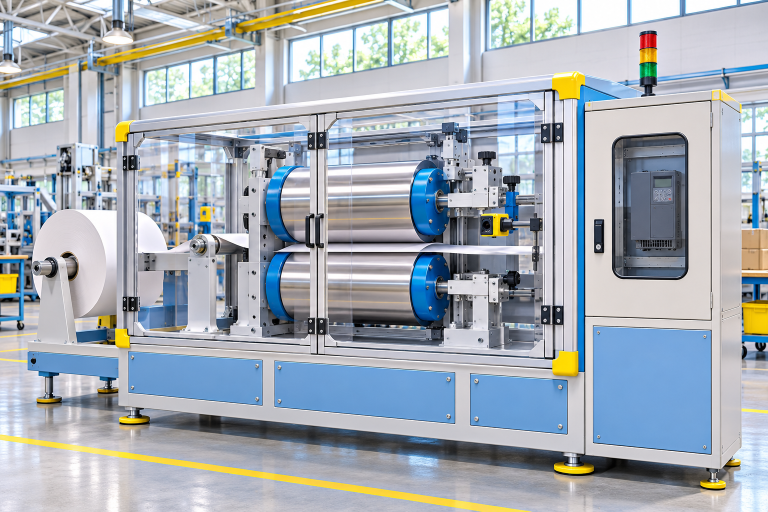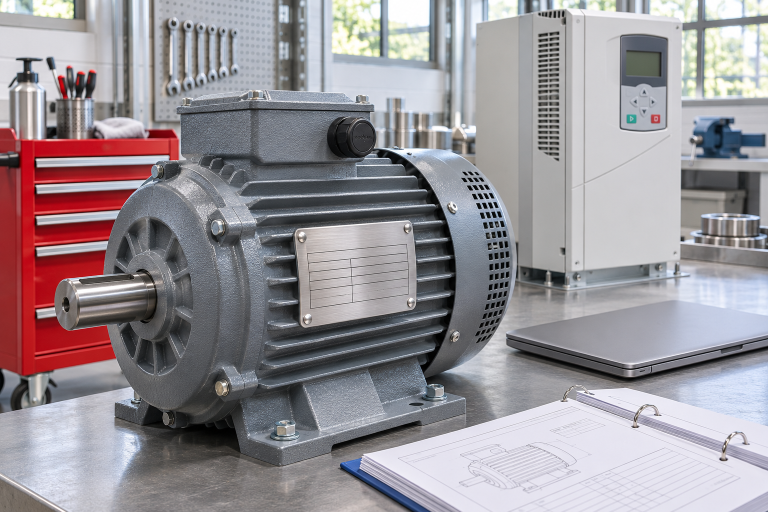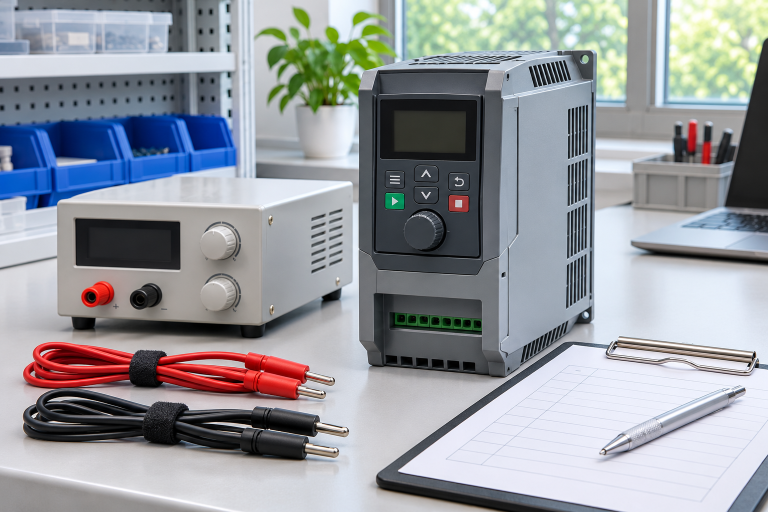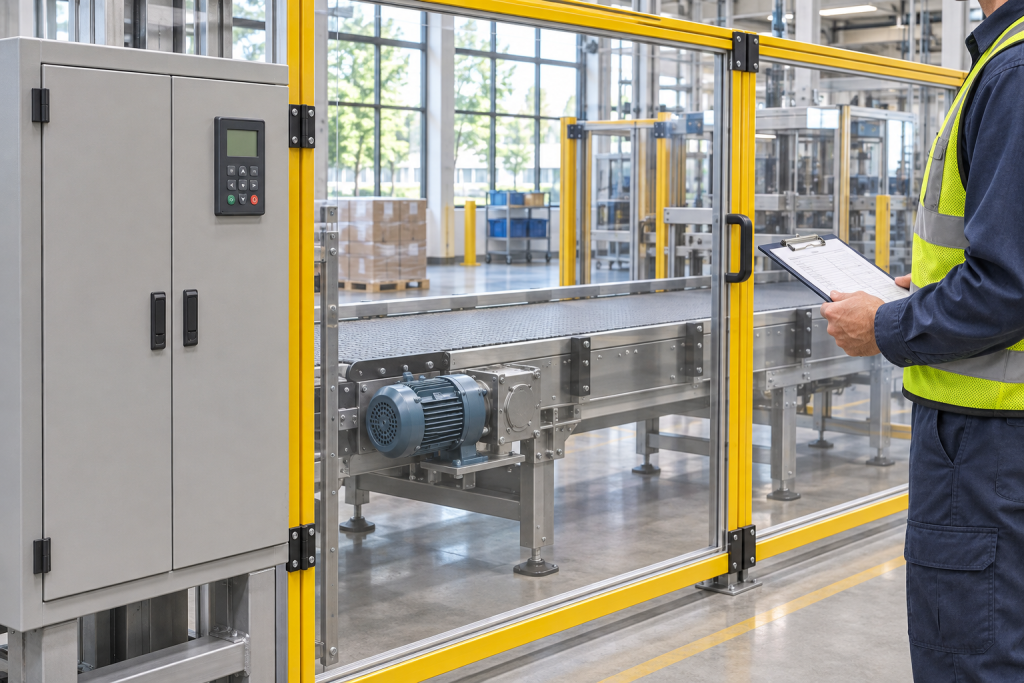
On a packaging line, an intermittent drive communication fault has two audiences. The drive technician wants to know which link failed. The machine owner wants to know what the conveyor did while the link was missing and who was allowed to restart it. A PowerFlex 40 spare decision should answer both questions. Returning a drive to a network is not the same as demonstrating acceptable machine behavior when that network goes away.
Capture the sequence before treating the drive as the culprit
Record the displayed fault, its time, and the state of the drive, controller and operator station as far as the available logs allow. Note whether other devices lost communication at the same time. A single drive fault on an otherwise healthy segment suggests a different investigation from a machine-wide interruption after a cabinet supply event. Neither sequence identifies the failed component by itself.
Rockwell Automation’s PowerFlex 40 user manual identifies F81 as loss of communication at the RS-485 DSI port. That locates the symptom; it does not distinguish a cable problem, an external adapter, an upstream controller issue or a fault inside the drive. Preserve the connection diagram and any adapter identification before removing equipment. The combination of records is more useful than a fault number copied onto a return label.
Record the approved response, not simply the default
The manual separates the communication-loss action from the time the drive waits before applying it. In the documented PowerFlex 40 setup, parameter A105 represents the action and A106 represents the delay. These fields describe functional drive behavior. They do not replace an independently designed protective function, and an article or default parameter table cannot authorize changing them.
Compare the installed record with the plant’s approved machine behavior. The difference between coasting and a commanded stop can affect what happens to product, the remaining movement of equipment and coordination with another conveyor. A fault indication may also feed the PLC or operator display. Define how the station should report the interruption and what must be true before a restart is permitted. A choice that reduces nuisance trips is not automatically the right choice for the machine.
Keep three different records with the spare
Keep a hardware record that identifies the complete drive, input rating, installed adapter or operator accessory and any separately retained parts. The 22B-D017N104 PowerFlex 40 drive listing provides a concrete catalog reference for an exact-code inquiry. It does not show which communication accessories were installed on the original machine or which are included in a particular offer. Ask for a clear delivery list and confirm the label of the offered unit.
Keep a configuration record that ties the parameter file to a particular asset and approved revision. Distinguish the setting used during production from a bench setup created for testing. If an adapter has configuration of its own, give it a separate entry. It is possible to restore the drive’s settings correctly while leaving the external communication path incomplete.
Finally, keep a machine response record. Write down which controller or operator requests motion, what indication is expected during a loss, what happens to adjacent equipment, and who authorizes recovery. The controls technician and machine owner should agree on the intended result before an acceptance test begins. Avoid inferring a safe restart from a keypad or a cleared fault alone.
Release at the level supported by evidence
A bench report may confirm hardware identification, readback of the settings and communication to an approved fixture. It does not show how an installed machine will behave when communication is interrupted. Plan any behavioral validation through a site-approved procedure with qualified personnel and the required guarding and isolation arrangements. Do not create an interruption on a running line just to see what happens.
Use explicit language on the release sheet: communication checked on bench, response not yet verified on machine, or accepted against an approved machine test. That distinction matters when shifts trade equipment or when an urgent spare is sent to a different plant. A later reviewer should be able to find both the evidence and its limits.
Send a complete catalog label, adapter identity, approved parameter snapshot and delivery scope through the DriveKNMS sourcing contact. If the question concerns an intermittent F81, include the available event sequence rather than requesting a replacement on the fault code alone.
Agree on the evidence before the planned outage. In a hypothetical line, the controller may report a communication alarm while the operator station still shows the last speed value. That stale display is not evidence of continued drive motion or of a successful stop. Decide which independent observations the test record needs, how to timestamp them, and how to handle a missing signal. Keep the restored response separate from the reinstatement decision: some teams use two signoffs so the person who confirms communication is not inadvertently also releasing the machine for production. This is a useful division of responsibility, not a substitute for the site’s procedure.
Frequently asked questions
Does F81 establish that the drive needs replacing?
No. It points to interrupted DSI communication. The connection, accessory, upstream equipment and drive still require separate evidence before assigning the failure.
Is clearing the fault the same as authorizing a restart?
No. The drive status and permission to run the machine are different decisions. Follow the machine’s documented controls and the site’s release procedure.
Should a replacement use the factory communication-loss response?
Do not assume that. Compare the approved application settings and manufacturer documentation, and obtain engineering review of any differences before service.
What does a successful bench communication test prove?
It supports the stated bench connection and configuration. It does not prove the stop response, interlock handling or operator recovery on the actual line.
Image: AI-generated editorial illustration, not an exact product photograph or installation reference.
© 2026 DriveKNMS. All rights reserved. Official Website: https://driveknms.com Inquiry: sale@driveknms.com | WhatsApp/Tel: +86 18359293191